
SOUTH-AFRICA
391 Courses
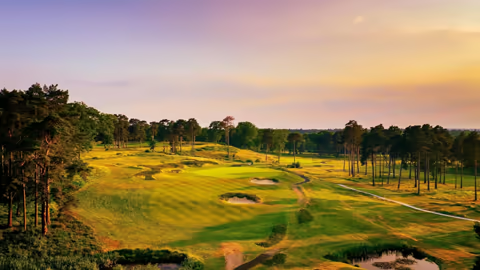
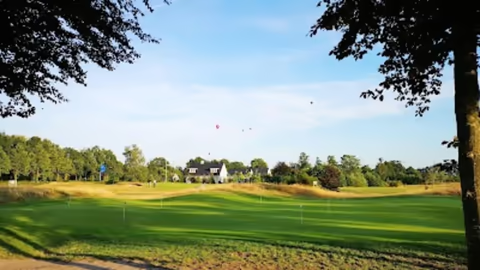
Golf in South Africa: Coastal Winds, Highveld Altitude, and a Living Colonial Legacy
Golf in South Africa occupies a unique position shaped by British colonial heritage, dramatic geography, and a modern redefinition of inclusivity and sustainability that has accelerated since 2020.
The historical roots of the game date back to the late nineteenth century, when British soldiers, administrators, and merchants introduced golf alongside railways and ports, particularly in Cape Town and Durban.
Early courses were often informal layouts carved into common land near military garrisons, evolving into structured clubs as colonial society expanded.
The founding of the Royal Cape Golf Club in 1885 established a formal anchor for the sport, and throughout the early twentieth century golf spread inland following mining booms, especially around Johannesburg and Pretoria, where the Highveld plateau offered firm turf and open space.
During the apartheid era, golf mirrored broader social divisions, with access largely restricted, yet the post-1994 period initiated a gradual transformation toward broader participation, development programs, and international reintegration.
By the early 2020s, South African golf had stabilized as one of the most diverse ecosystems globally, combining elite professional output, strong amateur structures, and a powerful tourism offering.
Regionally, the country’s golf identity is expressed through several contrasting areas.
The Western Cape blends coastal conditions with Mediterranean climates, where wind, sandy soils, and fynbos vegetation influence strategy and maintenance.
Gauteng, centered on Johannesburg and Pretoria, represents the competitive heartland, with high-altitude courses favoring distance control and year-round play due to dry winters.
KwaZulu-Natal offers subtropical golf, with lush fairways, sea-level ball flight, and a calendar that supports winter tourism from cooler regions.
The Eastern Cape and Garden Route introduce a transition zone, combining coastal exposure with rolling inland terrain and a growing emphasis on resort-style golf integrated into natural landscapes.
Signature courses illustrate these identities.
Royal Cape Golf Club, redesigned over time by architects such as Dr.
Charles Molteno Murray and later consultants, reflects classic parkland traditions with strategic bunkering and narrow approaches, and continues to host national championships.
Leopard Creek Country Club, designed by Gary Player, integrates Crocodile River borders, indigenous wildlife corridors, and risk-reward holes that have made it a regular host of the Alfred Dunhill Championship, showcasing how golf coexists with conservation.
Fancourt Links, designed by Gary Player on the Garden Route, adopts a true coastal links-inspired style adapted to southern African winds and has hosted Presidents Cup and South African Open events, reinforcing international credibility.
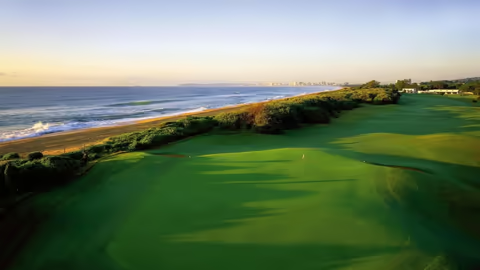
Durban Country Club, with its George Waterman heritage and later refinements, remains an example of classic seaside golf shaped by dunes and prevailing breezes, while Sun City’s Gary Player Country Club demonstrates resort-scale championship golf at altitude, long associated with the Nedbank Golf Challenge.
Player development has long been a strength, supported by school competitions, provincial unions, and elite academies linked to major clubs.
Post-2020 initiatives increasingly focus on inclusivity, township outreach, and scholarship pathways, aiming to broaden the talent pool.
South Africa has produced globally recognized professionals such as Ernie Els, whose major victories and course design work continue to influence the game, Retief Goosen with his US Open titles, and more recently players like Garrick Higgo, whose rapid ascent on international tours highlights the effectiveness of modern development systems.
Women’s golf has also advanced through structured programs, producing competitive players on international circuits.
Golf tourism is a major pillar of the South African golf economy, combining favorable exchange rates, diverse climates, and iconic landscapes.
Packages often link multiple regions, allowing visitors to play coastal and inland courses within a single trip.
Peak season typically aligns with the Southern Hemisphere summer from November to March, though winter months attract European travelers seeking milder conditions, particularly in Gauteng and KwaZulu-Natal.
Non-golf attractions are deeply integrated, including safari lodges near courses like Leopard Creek, wine tourism in the Western Cape, and cultural heritage sites, creating multi-dimensional itineraries.
Sustainability has become increasingly central since 2020, driven by water scarcity concerns and environmental awareness.
Courses invest in drought-resistant grasses, advanced irrigation monitoring, recycled water usage, and energy-efficient maintenance fleets.
Wildlife protection is not symbolic but practical, with many courses functioning as conservation buffers supporting birdlife and indigenous species.
Several clubs align with international environmental certification frameworks, reflecting a commitment to responsible land use.
Looking ahead, future projects in South African golf emphasize renovation over expansion, with upgrades to classic layouts, selective new resort developments tied to eco-tourism, and continued bids to host international tournaments to reinforce global relevance.
Growth forecasts suggest moderate participation increases, driven by junior engagement and tourism recovery, positioning South Africa as a mature golf nation where heritage, environment, and competitive excellence intersect..