MALTA
1 Courses
Golf in Malta: Fairways Between Fortresses and the Mediterranean
Golf in Malta occupies a distinctive niche in European golf culture, shaped by the island nation’s dense history, compact geography, and strong British colonial heritage.
Unlike many Mediterranean destinations that developed golf tourism through large resort complexes, Malta’s golfing identity evolved gradually from military recreation into a small but active sporting community.
The origins of golf on the islands trace back to the late nineteenth century when British officers stationed in the strategically important archipelago sought leisure activities similar to those found in the United Kingdom.
Informal play initially took place on open military land near Valletta, but organized golf began to take shape in the early twentieth century.
The decisive moment came in 1888 with the formation of the Royal Malta Golf Club, making it one of the oldest golf institutions in the Mediterranean.
The club’s course, later developed in the Marsa area inland from Valletta, reflects the practical constraints of the island’s limited space and semi-arid environment.
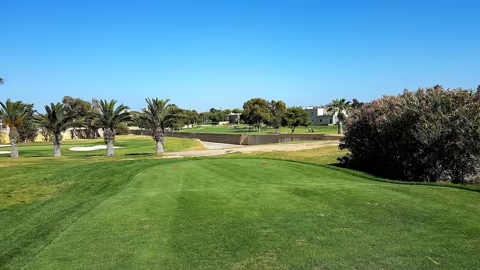
Over the decades the course evolved through multiple redesigns influenced by British agronomic practices and Mediterranean landscaping, gradually establishing a mature parkland layout integrated with local limestone terrain and palm-lined fairways.
Golf in Malta remained relatively exclusive during the mid-twentieth century, largely tied to expatriate communities and diplomatic circles, but the sport began opening to the local population in the late twentieth century as tourism expanded and Maltese sports infrastructure diversified.
Today Malta has a modest number of courses compared with larger European countries, yet the sport maintains an outsized cultural visibility due to the island’s compact size and the social role of the main clubs.
The principal golfing region is the central island of Malta itself, particularly the Marsa district where the Royal Malta Golf Club anchors the national golf scene with an 18-hole course surrounded by sports facilities including polo grounds and cricket pitches that reflect the island’s British sporting heritage.
The course is known for narrow tree-lined fairways, strategically positioned bunkers, and small greens that reward precise iron play rather than raw distance, a characteristic shaped by the restricted footprint of the property.
Beyond Marsa, emerging golfing interest has appeared in northern Malta where tourism infrastructure is concentrated around St.
Paul’s Bay and Mellieħa; although large championship courses have not yet been built there, the area is frequently discussed in development proposals because of its hotel capacity and coastal scenery.
The nearby island of Gozo, known for its rural landscapes and slower pace of life, has also attracted attention from planners exploring boutique golf projects integrated with eco-tourism and cultural heritage sites.
Signature courses in Malta therefore revolve primarily around the Royal Malta Golf Club, whose design has been refined by several architects and agronomists over time, adapting British parkland principles to Mediterranean conditions such as limestone soils and limited rainfall.
The course measures just over 5,700 meters from the back tees but compensates for its moderate length with doglegs framed by mature ficus and eucalyptus trees, subtly contoured greens, and carefully positioned water hazards that were added during modernization phases in the early twenty-first century.
The club has hosted numerous amateur championships and international invitational events, including Mediterranean regional competitions that bring players from Southern Europe and North Africa.
Another notable facility linked to Malta’s golf ecosystem is the Malta Golf Training Centre, which supports practice and instruction for both local residents and visiting golfers, reflecting the country’s focus on skill development within limited land resources.
Player development in Malta has gained momentum during the past decade through structured junior programs organized by the national federation and the Royal Malta Golf Club academy.
These initiatives emphasize youth participation, coaching certification, and partnerships with European training networks.
Although Malta has not yet produced a globally prominent professional golfer, several players compete regularly in European amateur circuits, and junior participation has increased since 2020 thanks to school outreach programs and youth tournaments designed to integrate golf into the island’s broader sports culture.
Tourism remains an important pillar of Maltese golf, particularly because the island’s mild Mediterranean climate allows year-round play.
The most popular golfing months typically run from October through May when temperatures remain comfortable and rainfall supports greener fairways.
Golf visitors often combine their rounds with the archipelago’s extensive cultural attractions, including UNESCO-listed baroque architecture in Valletta, prehistoric temples older than the Egyptian pyramids, and coastal landscapes suited for sailing and diving.
The compact size of Malta means golfers can reach historical sites, beaches, and restaurants within minutes of finishing a round, creating a distinctive blend of sport and cultural exploration.
Sustainability considerations are increasingly important for golf in Malta due to the islands’ limited freshwater resources.
Course management has adopted water-efficient irrigation systems, drought-resistant turf varieties, and recycling of treated wastewater where possible.
Environmental stewardship also includes protection of local bird habitats and careful management of green spaces within urbanized surroundings.
These measures align with broader European sustainability standards for golf operations, particularly in regions facing water scarcity.
Looking toward the future, Malta’s golf sector is cautiously exploring expansion opportunities while balancing environmental and land-use constraints.
Several proposals discussed since 2020 involve integrated resort developments that would combine boutique golf courses with hotels, residential communities, and conservation zones, particularly in northern Malta and on Gozo.
Government tourism strategies have also mentioned the possibility of attracting more Mediterranean amateur championships and winter training camps for European players seeking mild climates.
While large-scale expansion remains unlikely due to geographic limitations, Malta’s golf identity continues to evolve through a combination of heritage preservation, targeted tourism, and sustainable course management, ensuring that the sport maintains a distinctive presence within one of Europe’s most historically layered island nations..